WFU

Clinical psychologist · Improv coach · Taipei

Wang Chia-Chi (王家齊)

I train therapists the way improvisers train: rehearse, get feedback, do it again.

Licensed clinical psychologist and applied improv practitioner based in Taipei, Taiwan. He uses improv in clinical training for psychotherapists, and has taught helping skills, expressive arts therapy and group leadership through improv at universities in Taipei.

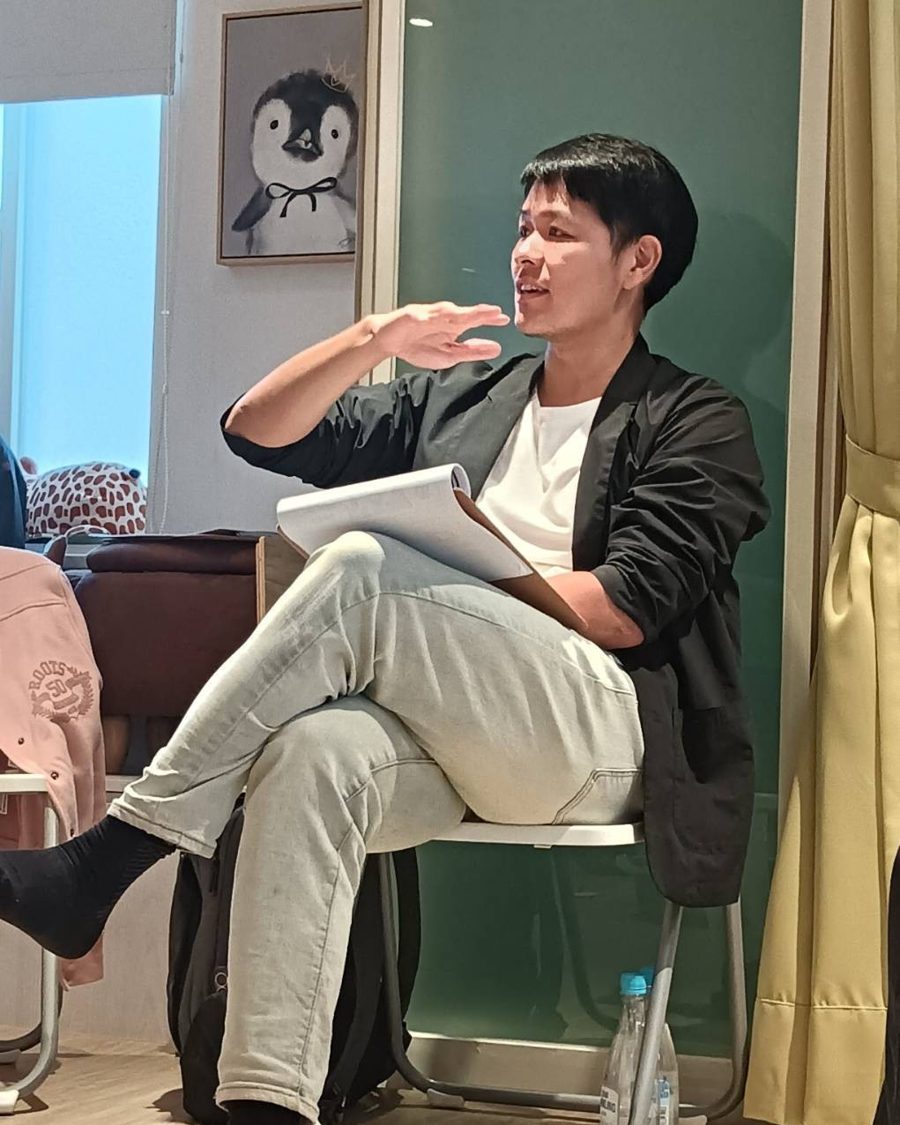
Wang Chia-Chi leading a clinical practicum in Taipei
Leading a clinical practicum, Taipei, 2024
500+applied improv workshops
3books in Mandarin
2015ten days with Keith Johnstone, Canada

Workshops

  • Clinical trainingApplied improv for psychologists and therapists
  • EducationApplied improv for teachers and educators

Recent teaching

  • 2025–2026Online group-supervision practicum for psychologists, co-taught with improv performer Nisha Chao (趙懷玉)
  • 2025Advanced practicum on the therapeutic setting, two-part workshop
  • 2025Applied improv for communication and helping skills, full-day workshop, Hualien
  • 2023Emotional blackmail in relationships, university counseling setting
  • 2018–2021Improv for helping skills, expressive arts therapy and group leadership, universities in Taipei
  • 2018Training course for psychologists, public hospital in Taipei

Trained abroad

  • 2025React! Impro festival, Germany
  • 2015Ten-day workshop with Keith Johnstone, Canada

tomoewcc@gmail.com · Instagram · Full CV (Chinese) · chiachipsy.com

Writing

Notes on improv, therapy and training, from the rehearsal room and the therapy room.

Pages

Friday, May 16, 2025

Leaving Time in Germany — What a Ten-Day Improv Festival Taught Me About Trust, Language, and Play

Written by Wang Chia-Chi (王家齊), a clinical psychologist and improviser based in Taipei, Taiwan. He trains psychologists and teachers in applied improv and has written three books in Mandarin. More about him: chiachipsy.com.  
Let’s connect → tomoewcc@gmail.com | Instagram


Photos: Hannes Gleue

React! Impro, Weil der Stadt (near Stuttgart) · April — 11 days, dozens of scenes, one jet-lag that might just be longing in disguise.

We didn’t share a language.
But we shared a moment.
Not lost—improvised in translation.

I came home to Taiwan almost a week ago, yet my body still thinks it’s Germany. “If the jet-lag hasn’t left,” my friend "N" joked, “maybe you haven’t left either.” She was right: a little piece of me is still sitting in that rehearsal room, laughing with forty-eight strangers who somehow became family.


When English Fails, Trust the Partner


Ten years ago, at a Keith Johnstone workshop in Canada, my biggest fear was that my English wasn’t good enough. Ten years later, my grammar is still far from perfect—but I’ve learned how to connect onstage without it.

On day two in Germany Shawn Kinley asked us to describe objects in precise detail—a nightmare for my vocabulary. After class I confessed my frustration:

Me: “What do I do when words freeze?”
Shawn: “Run an experiment. Next time, speak Chinese.”

So I did. 

Sunday, April 20, 2025

Where Improv Meets Therapy – A Psychologist’s Journey


Written by Wang Chia-Chi (王家齊), a clinical psychologist and improviser based in Taipei, Taiwan. He trains psychologists and teachers in applied improv and has written three books in Mandarin. More about him: chiachipsy.com.  
For speaking and training enquiries → tomoewcc@gmail.com | Instagram


A psychologist standing in a bright counseling room


Hi, I’m Wang Chia-Chi —


an improviser, playbacker, and licensed psychologist based in Taipei, Taiwan.

I believe that improvisation and psychotherapy are both rooted in presence, curiosity, and deep listening — and that when combined, they offer powerful ways to connect, heal, and grow.

I currently work at Better Help Clinic, in Taipei, Taiwan. My clinical training is in relational and trauma-focused work. My approach to therapy is integrative and relational — drawing from psychodynamic theory, expressive arts, and embodied practices. Whether in the therapy room or on stage, I care deeply about helping people reclaim their voice, feel seen, and stay connected to their inner life. This site is about speaking and training. No clinical service is offered here.

I’m also a performer, musician, and improv coach at Inprint Theatre — a Playback Theatre ensemble made up of actors, musicians, and psychologists/drama therapists.


Improvising Real Life: On Stage with Inprint Theatre


At Inprint Theatre, we honor the spirit of Playback Theatre. By combining it with the playful, spontaneous, and creative elements of improvisational theatre, we turn real-life moments into theatrical expression. During our shows, we listen to personal stories shared live by audience members, then bring those stories to life on stage — through improvised theatre, music, clowning, and live illustration — and offer them back to the storyteller as a creative gift.

Friday, September 8, 2023

How to Use Improv Skills to Enhance the Effectiveness of Trauma Therapy?


Written by Wang Chia-Chi (王家齊), a clinical psychologist and improviser based in Taipei, Taiwan. He trains psychologists and teachers in applied improv and has written three books in Mandarin. More about him: chiachipsy.com.  
Let’s connect → tomoewcc@gmail.com | Instagram


Chart pairing trauma therapy approaches (hypnosis, psychodrama, Gestalt, family systems, somatic experiencing, trauma-informed care) with matching improv skills


Trauma therapy is a significant topic in psychotherapy. However, I've always wondered, "What is the right way to work with emotional trauma?"

With this question in mind, I joined my colleague, Hung-Ru Chen's workshop "Healing Magic in the Counseling Room." 

During the course, when he shared the presentation on "Integration of Trauma Therapy Schools," my eyes lit up...

Oh my, I got it.


School of Trauma Therapy


In the workshop, Hung-Ru listed the trauma therapy schools that he commonly used as follows:
  • Hypnosis
  • Trauma-Informed Therapy
  • Psychodrama
  • Gestalt Therapy
  • Internal Family Systems (IFS)
  • Somatic Experiencing (SE)
Each school has its own focus and intervention methods, such as: